← Journal
Critical Futures
Why Do Driven Workers Turn Down Raises?
How the benefit cliff hurts us all, and a way for employers change it.
Written by
Shannon Mitchell
Most people have never heard of the benefits cliff, yet it shapes the lives of thousands of working Vermonters. It is a quirk in how public assistance is built, one that can turn a well-earned raise into a step backward. It is also, encouragingly, a problem with real fixes.
The mechanics are worth understanding. Public supports, food assistance, health coverage, child care, phase out as people earn more. But they do not always fade gradually; at certain income lines they drop off all at once. Cross one of those lines by a little, and a family can lose benefits worth far more than the raise that pushed them over. On paper they are earning more. In practice they have less to work with.
Part of what makes the cliff so sharp is that each of these programs was designed on its own, with its own income limit, never meant to be stacked together. A family can sit just under the threshold for several at once, and a single raise can knock a few of them loose in the same month. The result is not a gentle downward slope but a ledge, and it lands hardest on the people doing exactly what they are told to do: work more, earn more, move up.
The numbers can be stark. In one Vermont case, a raise added about $2,080 a year and cost the family $18,000 in food assistance. On the math alone, they were better off turning it down.
01 · A Vermont Problem
It is a widespread problem, and in Vermont a pressing one. In Barre, 55.3% of single mothers with children were living below the federal poverty line in 2018, up about 10% in just two years. Behind that figure are households working hard and still unable to get ahead, often because the cliff penalizes the very advancement meant to lift them out.
The effort to change that is bigger than any single project. In 2020, the greater Barre area won a three-year, $300,000 grant through the Federal Reserve Bank of Boston’s Working Communities Challenge, with Green Mountain United Way as the backbone organization and a goal of cutting the share of single mothers in poverty by 15% over ten years. It brought the city, employers, hospitals, the state, and local nonprofits around one aim. Tawnya Kristen, the organization’s executive director, has described the women at the center of it as “the essential backbone of our workforce and our families.”
Much of that work runs through Working Bridges, Green Mountain United Way’s model for meeting people where they already are, at the workplace. A resource coordinator helps employees navigate benefits, transportation, and the occasional emergency, and works with employers to change the policies that trip families up. The benefits cliff sits close to the center of it, and it is exactly the kind of problem that is easy to feel and hard to explain. With funding from the Vermont Women’s Fund, Green Mountain United Way and Working Bridges brought us in to make it understandable, and fixable, for the people who could act on it.
The biggest obstacle is not that people do not care; it is that they cannot see it. To anyone who has never had to run the numbers, the cliff is invisible, which is why it so rarely reaches the employers and officials who could help. A manager watches a good employee turn down a promotion and assumes they lack ambition, when the truth is that the raise would have left their family worse off.
A small raise has the potential to quickly destabilize a family.
— Green Mountain United Way
02 · Why a game?
The cliff is genuinely hard to grasp from the outside. Every household faces a different set of thresholds, and the math shifts from month to month. So instead of another report, we built a game. Around a table, a group takes on the life of one household for what plays out as a month, working together to find enough support for that person to take an opportunity without slipping off the cliff. It turns the tangled, shifting, personal math of the benefits cliff into something you can hold in your hands and reason through together.
The design took real work. Every rule is grounded in the lived experience of families and the people who serve them, and we tested it in rounds, changing it whenever a session showed a truer version. The goal was never a clever game; it was a faithful one, honest enough that a room of people who had never faced the cliff could sit inside the decision and see why a raise can be the wrong move.
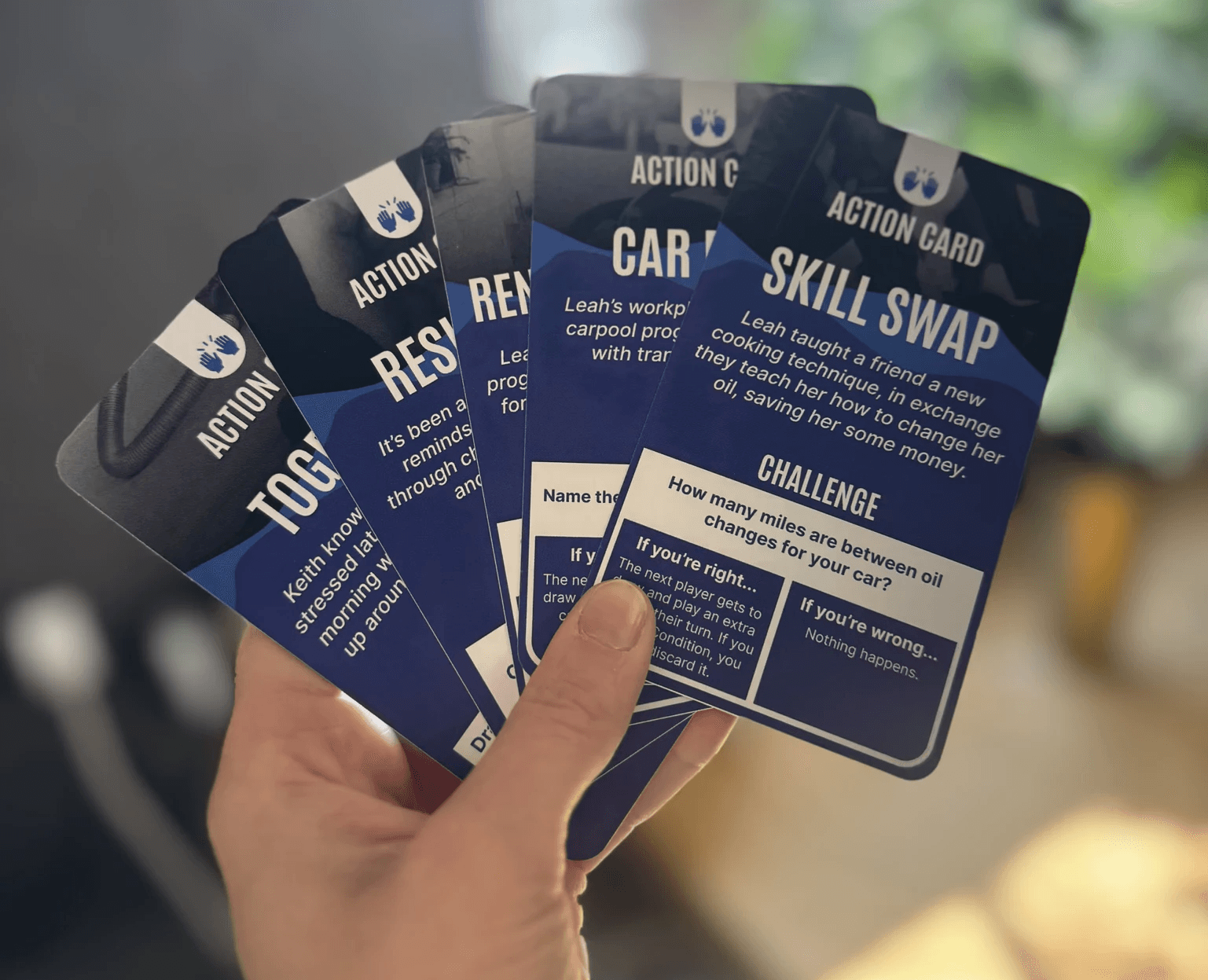
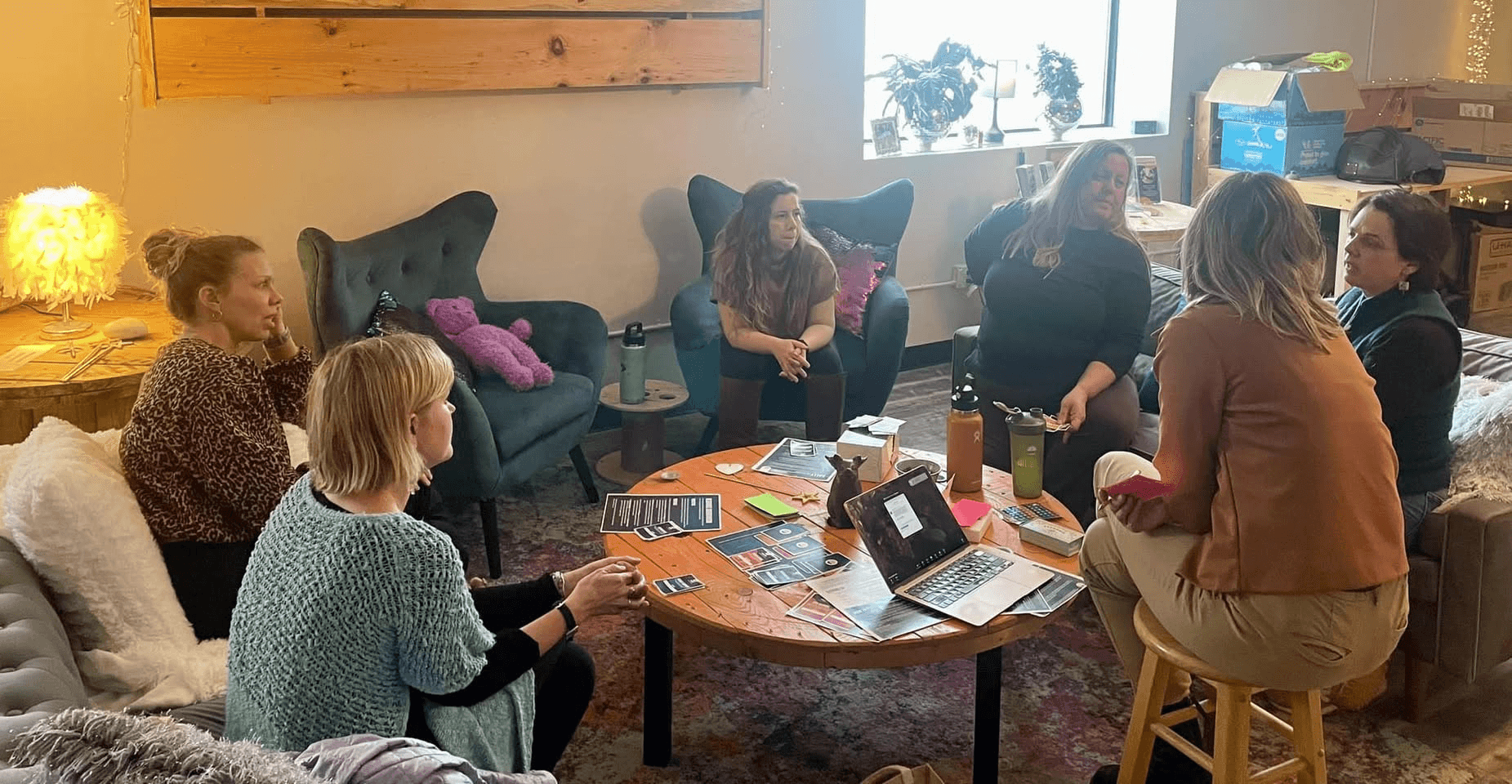
Fig. 1. From the benefits cliff project.
And it points to real ways out. The bridges in the game are practical, low-cost supports an employer can offer today, an on-site food pantry, a fuel card, flexible hours, help with a licensing fee, that close the gap a raise creates and keep a good worker moving up. Two things tend to happen at the table. Employers stop reading a turned-down promotion as a lack of drive, and they leave with a short list of changes they can actually make.
03 · In the field
The approach is already at work, and it is working. The game anchors a hands-on training that Green Mountain United Way brings to employers, business associations, and policymakers, putting the cliff in front of the people best positioned to flatten it, one workplace at a time. No single employer can fix a system built from dozens of separate programs, but an employer can bridge the gap for the family in front of them, and enough of those bridges, added up, begin to change the shape of the cliff itself.
The benefits cliff is real and stubborn, but it is not a mystery, and it is not unbeatable. Once people can see it, most want to do something about it. The game makes it impossible to look away from, and hands them a place to start.
Learn more Working Family Stability & the Benefits CliffSee how Green Mountain United Way and Working Bridges are taking on the benefits cliff across Vermont. |
|---|